Comorbidities: Psoriasis as a Systemic Disease
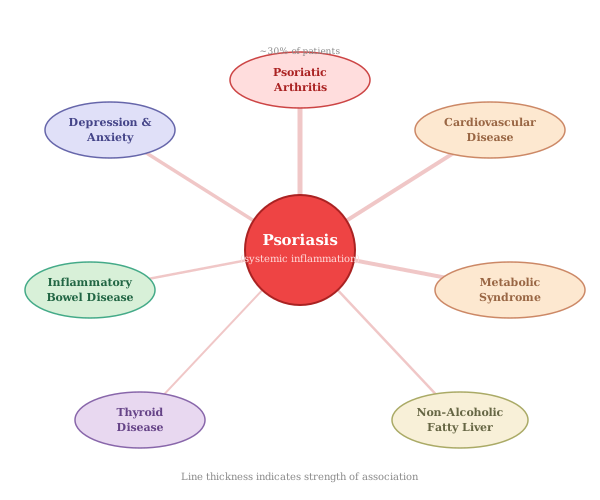
We now firmly recognise psoriasis as a systemic inflammatory condition, associated with a range of comorbidities that extend well beyond the skin. In 2019, the American Academy of Dermatology and the National Psoriasis Foundation published comprehensive guidelines identifying the following conditions as psoriasis comorbidities (National Psoriasis Foundation, 2024).
14.1 Psoriatic Arthritis (PsA)
The most common comorbidity. An estimated 30–33% of people with psoriasis develop psoriatic arthritis, which causes pain, swelling, and stiffness in the joints. Skin disease precedes joint disease in the majority of cases. Certain HLA-B alleles, particularly HLA-B27, are associated with increased PsA risk, whereas HLA-C06:02 (the major skin psoriasis risk allele) is not specifically linked to PsA (Dand et al., 2020). For a detailed account of PsA clinical features, diagnosis, and management, see Section 15.
14.2 Cardiovascular Disease
Patients with severe psoriasis have an elevated risk of myocardial infarction (heart attack), stroke, atherosclerosis (build-up of fatty plaques inside arteries), and cardiovascular mortality. The chronic systemic inflammation of psoriasis, driven by the same TNF-α/IL-23/IL-17 axis, promotes endothelial dysfunction (damage to the inner lining of blood vessels), insulin resistance, and atherogenesis (the process of artery-clogging plaque formation) through shared inflammatory pathways (Hu & Lan, 2017). A meta-analysis encompassing 42,000 psoriasis patients found the odds ratio for metabolic syndrome was as high as 2.26 (Garshick et al., 2021). TNF-α inhibitors actually decrease the risk of myocardial infarction in psoriasis patients (Hu & Lan, 2017).
14.3 Metabolic Syndrome
Psoriasis is significantly associated with metabolic syndrome: obesity, type 2 diabetes, hypertension, and dyslipidemia (unhealthy levels of fats in the blood). The release of excessive pro-inflammatory cytokines such as TNF-α and IL-1 from psoriatic inflammation causes chronic low-grade systemic inflammation, which promotes insulin resistance, visceral adiposity (accumulation of fat around internal organs), and dyslipidemia (Takahashi & Iizuka, 2012). Psoriasis patients have up to 15% lower HDL cholesterol and dramatically reduced HDL efflux capacity, with a lipid profile resembling that of diabetic patients (Garshick et al., 2021).
14.4 Mental Health
Psoriasis significantly affects mental health. Patients are approximately 50-60% more likely to carry a diagnosis of depression and experience elevated rates of anxiety, social stigma, and reduced quality of life (Garshick et al., 2021). The visible nature of the disease contributes to shame, social withdrawal, and in severe cases, suicidal ideation (Takahashi & Iizuka, 2012).
14.5 Inflammatory Bowel Disease (IBD)
Psoriasis and IBD (Crohn’s disease and ulcerative colitis) share common immune pathways and genetic susceptibility loci. The prevalence of IBD in psoriasis patients is approximately four times higher than in the general population (Ni & Chiu, 2014).
14.6 Metabolic Dysfunction-Associated Steatotic Liver Disease (MASLD)
MASLD (formerly known as Non-Alcoholic Fatty Liver Disease, or NAFLD, renamed by multi-society consensus in 2023) prevalence is significantly higher in psoriasis patients, particularly those with more severe skin disease. This has important implications for treatment selection, as several systemic psoriasis therapies are hepatotoxic (can cause liver damage) (Prussick & Miele, 2018).
14.7 The “Psoriatic March” Hypothesis
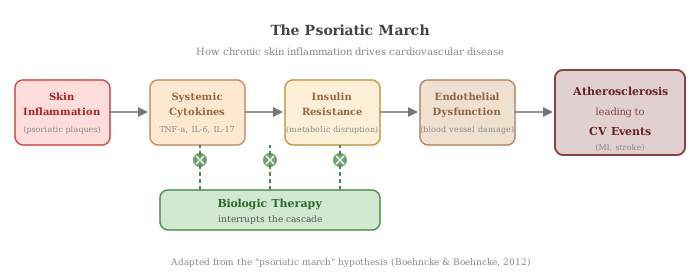
A unifying hypothesis known as the “psoriatic march” proposes that chronic skin-based inflammation in psoriasis induces systemic inflammation, which leads progressively to insulin resistance, endothelial dysfunction, atherosclerosis, and ultimately cardiovascular events. The model suggests that effective early treatment of psoriasis may help prevent the cascade of cardiometabolic comorbidities (Hu & Lan, 2017).
14.8 Cancer Risk
The relationship between psoriasis and cancer has been investigated through multiple large population-based cohort studies and meta-analyses. The key findings are:
Lymphoma. Psoriasis patients have a relative risk (RR) of approximately 1.56 for lymphoma overall, with cutaneous T-cell lymphoma (CTCL) showing the strongest association (HR 6.22). This likely reflects chronic immune stimulation and T-cell proliferation, the same processes that drive psoriasis itself (Vaengebjerg et al., 2024). The diagnostic challenge is real: early CTCL can mimic psoriasis clinically, and a biopsy is essential when psoriasis presents atypically or fails to respond to standard therapy.
Keratinocyte cancers (basal cell carcinoma and squamous cell carcinoma) show an RR of approximately 2.28. This is at least partly attributable to phototherapy exposure (PUVA in particular, see Section 24) and immunosuppressive treatments, rather than psoriasis itself (Li et al., 2024).
Solid organ cancers. Modest increases have been reported for lung cancer (RR 1.26) and bladder cancer (RR 1.12), though confounders such as smoking prevalence (higher in psoriasis, see Section 8.4) complicate interpretation.
Biologic therapy does not increase cancer risk. Large registry studies including BADBIR and PSOLAR have consistently shown that biologic-treated patients don’t have significantly elevated malignancy rates compared with conventionally treated patients or the general population (Vaengebjerg et al., 2024). That’s important clinical reassurance for both patients and prescribers.
Screening recommendations. Current guidelines don’t mandate universal cancer screening specifically for psoriasis patients, but clinicians should ensure age-appropriate cancer screening is up to date and should maintain a low threshold for biopsy of atypical or treatment-resistant lesions, particularly in patients with extensive phototherapy histories.
Research stage: Established. Evidence strength: High. Large cohort studies, meta-analyses, and long-term registry data.
14.9 Chronic Kidney Disease
Patients with severe psoriasis have a significantly increased risk of developing chronic kidney disease (CKD) and progressing to end-stage renal disease (ESRD), with a pooled hazard ratio of approximately 1.65 for CKD (95% CI 1.29-2.12) after adjustment for confounders including diabetes, hypertension, and obesity (Wan et al., 2023).
The mechanisms linking psoriasis to kidney disease are multifactorial:
- Systemic inflammation: IL-23 can drive renal inflammation characterised by massive T-lymphocyte infiltration. The same TNF-α, IL-17, and IL-23 that damage skin may also damage glomeruli and renal tubules.
- Accelerated atherosclerosis: The “psoriatic march” (Section 14.7) promotes renal artery atherosclerosis and ischaemic nephropathy.
- Drug nephrotoxicity: Methotrexate can cause interstitial nephritis and direct tubular toxicity, particularly with chronic use. Ciclosporin causes dose-dependent nephrotoxicity.
- Metabolic syndrome: Obesity, diabetes, and hypertension (all more prevalent in psoriasis) are independently the leading causes of CKD.
A 2025 retrospective cohort study found that psoriasis remains a risk factor for CKD even in patients with concurrent type 2 diabetes, with significantly higher rates of diabetic nephropathy, CKD, ESRD, and dialysis at 3, 5, and 10 years. This held true even in patients receiving renoprotective or biologic therapy, suggesting the inflammatory contribution is additive rather than fully explained by metabolic comorbidities (Sontam et al., 2025).
Clinical implications: Clinicians should monitor renal function (eGFR, serum creatinine) regularly in psoriasis patients, particularly those on nephrotoxic medications. Dose adjustments for methotrexate and other renally cleared drugs are essential in patients with impaired renal function (see Section 21.4).
Research stage: Established. Evidence strength: Moderate-High. Population-based cohort studies with consistent findings; biological plausibility well-established.
14.10 Ocular Disease and Uveitis
Ocular manifestations are surprisingly common in psoriasis, with prevalence estimates ranging from 10% to 81.4% depending on the definition and detection method (Kalogeropoulos & Gorgoli, 2025). The spectrum includes:
- Dry eye: The most prevalent manifestation. Chronic blepharitis (eyelid inflammation) and meibomian gland dysfunction lead to tear film instability. Prevalence estimates range from 18% to 64% of psoriasis patients.
- Blepharitis: Direct psoriatic involvement of the eyelid margins, often with characteristic scaling.
- Conjunctivitis: Non-infectious conjunctival inflammation.
- Uveitis: Intraocular inflammation affecting the uveal tract (iris, ciliary body, choroid). Uveitis incidence in psoriasis is estimated at 7–20%, with patients who have psoriatic arthritis at substantially higher risk than those with skin-limited disease.
A 2026 study in Eye confirmed that biologic therapy is associated with reduced ocular disease, particularly uveitis, suggesting that systemic inflammation control benefits the eyes as well as the skin and joints (Kim et al., 2026).
If you have psoriasis, particularly with PsA, watch for ocular symptoms: redness, pain, photophobia, blurred vision. Get a prompt ophthalmological assessment when uveitis is suspected.
Research stage: Established. Evidence strength: Moderate. Systematic reviews and large cross-sectional studies; biologic protective effect supported by registry data.
14.11 Hearing Loss
An association between psoriasis and hearing impairment has emerged from a meta-analysis of 15 studies encompassing 202,683 subjects. Key findings include:
- Sensorineural hearing loss: OR 3.85 (95% CI: 1.87–7.92). The hearing impairment is predominantly subclinical and most pronounced at high frequencies, with the greatest threshold difference at 4000 Hz (Aljasser et al., 2023).
- Sudden sensorineural hearing loss: HR 1.45 (95% CI: 1.17–1.80).
- Vestibular dysfunction: OR 13.12 (95% CI: 2.76–62.46) on caloric testing, though this finding is based on small studies and should be interpreted cautiously (Aljasser et al., 2023).
The proposed mechanisms include inflammation-mediated damage to the cochlear vasculature (the stria vascularis is particularly vulnerable to immune-mediated injury), autoimmune inner ear disease triggered by cross-reactive antibodies, and methotrexate ototoxicity.
The clinical takeaway: unexplained hearing difficulty or tinnitus in psoriasis patients should prompt audiological evaluation. Whether psoriasis treatment can prevent or reverse hearing loss remains unknown.
Research stage: Emerging. Evidence strength: Moderate. Meta-analysis with consistent direction of effect; mostly subclinical; mechanism not definitively established.
14.12 Periodontal Disease
Meta-analyses demonstrate significant associations between periodontitis and psoriasis, with shared risk factors (smoking, diabetes, stress, obesity) and overlapping inflammatory pathways (TNF-α, IL-17, NF-κB) (Keller & Lin, 2022).
Key evidence includes:
- Psoriasis patients have significantly higher rates of periodontal disease, deeper probing depths, and greater clinical attachment loss compared with matched controls.
- Patients with both conditions report worse oral health-related quality of life.
- Interventional evidence: Preliminary studies suggest that non-surgical periodontal therapy (scaling and root planing) may positively influence psoriasis severity, possibly by reducing the systemic inflammatory burden (Kalakonda et al., 2025).
Clinicians managing psoriasis should ask about dental health and encourage regular dental review, particularly in patients with metabolic syndrome or smoking history.
Research stage: Emerging. Evidence strength: Moderate. Meta-analyses establish association; interventional evidence is preliminary but promising.
14.13 Osteoporosis and Bone Health
An estimated 3–18% of psoriasis patients develop osteoporosis, and psoriasis patients have higher fracture odds even after adjusting for traditional risk factors. Here’s what makes this puzzling: the increased fracture risk persists in studies where bone mineral density (BMD) differences aren’t statistically significant, suggesting mechanisms beyond simple bone density reduction (Passos et al., 2022).
Proposed mechanisms include:
- Chronic inflammation: TNF-α and IL-17 promote osteoclast differentiation and bone resorption through the RANKL pathway.
- Vitamin D deficiency: Common in psoriasis patients (possibly due to skin coverage behaviour, reduced sun exposure from embarrassment, or disrupted vitamin D metabolism).
- Medication effects: Long-term systemic corticosteroid use (though avoided in psoriasis where possible, see Section 9.5) and cyclosporine can reduce bone density.
- Immobility: Pain from psoriatic arthritis may reduce weight-bearing exercise, which is essential for bone maintenance.
Dual-energy X-ray absorptiometry (DXA) scanning should be considered in psoriasis patients with additional osteoporosis risk factors, and vitamin D levels should be monitored.
Research stage: Emerging. Evidence strength: Low-Moderate. Heterogeneous studies with variable BMD findings; fracture risk data more consistent.
14.14 Venous Thromboembolism
Psoriasis patients have an elevated risk of venous thromboembolism (VTE), including deep vein thrombosis (DVT) and pulmonary embolism (PE). A meta-analysis of 9 studies encompassing over 4.5 million participants found a pooled relative risk of 1.43 (95% CI 1.29-1.58) for VTE in psoriasis patients compared to the general population (Ungprasert et al., 2014). The risk is higher in patients with severe disease and in those with psoriatic arthritis.
The mechanisms link back to the same systemic inflammation driving other comorbidities. TNF-α and IL-17 upregulate tissue factor expression on monocytes and endothelial cells, promoting a prothrombotic state. Psoriasis patients also show elevated platelet activation, increased P-selectin levels, and impaired fibrinolysis. The metabolic syndrome component (obesity, insulin resistance) adds further prothrombotic risk.
This has practical implications. Clinicians should consider VTE risk when prescribing medications that independently increase clotting risk, and should ensure psoriasis patients receive appropriate thromboprophylaxis during hospitalisation, surgery, or prolonged immobilisation. The JAK inhibitor cardiovascular safety signal (Section 24.5) includes a thromboembolic component that’s particularly relevant here.
Research stage: Established. Evidence strength: Moderate. Meta-analyses with consistent findings; biological mechanisms plausible and partially characterised.
14.15 Neurodegeneration: Alzheimer’s and Parkinson’s Disease
An unresolved question is whether psoriasis increases the risk of neurodegenerative diseases. Population-based studies have reported modestly elevated risks of both Alzheimer’s disease (AD) and Parkinson’s disease (PD) in psoriasis patients (Fu & Chi, 2022).
The biological rationale is plausible:
- TNF-α and IL-17 have been detected at elevated levels in the brains of AD and PD patients.
- Chronic systemic inflammation may accelerate blood-brain barrier (BBB) disruption, allowing peripheral inflammatory mediators to access the central nervous system.
- Shared genetic susceptibility loci have been identified between psoriasis and neuroinflammatory diseases.
However, causality has not been established. Confounders including metabolic syndrome, depression, smoking, and alcohol use (all more prevalent in psoriasis) are themselves risk factors for neurodegeneration. Whether psoriasis treatment reduces neurodegeneration risk is entirely unknown.
This remains an area for epidemiological surveillance rather than clinical action. We need further large-scale, well-controlled longitudinal studies.
Research stage: Emerging. Evidence strength: Low. Epidemiological associations with biological plausibility; confounding is substantial; causality not demonstrated.