Epidemiology
3.1 Global Prevalence
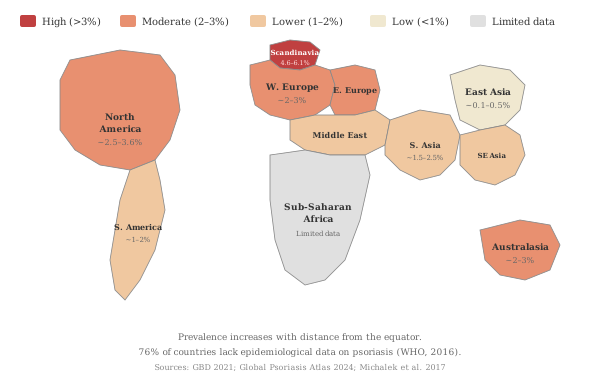
Psoriasis affects approximately 2–3% of the global population, though prevalence varies considerably by geography, ethnicity, and age. The commonly cited figure of “125 million people worldwide,” originating from the International Federation of Psoriasis Associations and the WHO’s 2016 Global Report on Psoriasis, represents an estimate based on applying regional prevalence rates to global population figures and likely reflects lifetime or period prevalence. The more recent Global Burden of Disease (GBD) 2021 study uses a standardised methodology to measure point prevalence (the number of people living with active disease at a given time). It estimated approximately 42.98 million prevalent cases and 5.10 million new cases of psoriasis worldwide in 2021, with the global burden having nearly doubled since 1990 (Xiong et al., 2025). The difference between these figures reflects methodological differences in how prevalence is defined and measured, not a true discrepancy.
The Global Psoriasis Atlas 2024 update estimated the crude lifetime prevalence for adults in high-income countries at 1.40%, with wide geographic variation (Dimmock, Aalemi et al., 2024). A systematic review of worldwide epidemiology found adult prevalence ranged from 0.51% to 11.43% across different populations, and from 0% to 1.37% in children (Michalek et al., 2017).
3.2 Geographic Variation
Psoriasis prevalence is notably higher in regions further from the equator. Norway has one of the highest recorded rates at approximately 4.6%, with even higher rates (6.1%) in its northern regions, possibly due to reduced sunlight exposure and lower vitamin D levels (Dairov et al., 2024). The United Kingdom reports a prevalence of approximately 2.8% (Parisi et al., 2013). In contrast, psoriasis is relatively rare in certain East Asian and African populations (Parisi et al., 2013).
3.3 Age and Gender
Psoriasis can present at any age, but incidence peaks bimodally: in early adulthood (ages 15–30) and again in later life (ages 50–60). These two peaks correspond to what is sometimes classified as Type 1 psoriasis (early onset, typically before age 40, strongly associated with HLA-C*06:02 and family history) and Type 2 psoriasis (late onset, after age 40, weaker genetic association) (Dand et al., 2020). The overall disease burden is slightly higher in men, though certain regions show higher female prevalence, particularly in East and South Asia (Xiong et al., 2025).
3.4 Racial and Ethnic Disparities
Prevalence figures mask significant disparities in diagnosis and treatment. In the US, psoriasis prevalence is highest in white populations (approximately 3.6%) but also substantial in Asian (2.5%), Hispanic (1.9%), and Black (1.5%) populations (Armstrong et al., 2021). The lower rates in non-white populations may partly reflect underdiagnosis: psoriasis on darker skin looks different from the textbook descriptions (Section 10.1, 21.3), and a 2024 NPF report found racial and ethnic minority individuals are 112% more likely to live with undiagnosed psoriasis (NPF, 2024).
Clinical trial participation mirrors the problem. An analysis of pivotal biologic trials found that Black patients comprised less than 3% of participants, despite making up 13% of the US population. The VISIBLE trial (NCT05272150), initiated in 2022 to specifically assess guselkumab in patients with skin of colour, reflects a growing recognition of this evidence gap but remains an exception rather than the norm. Few genome-wide association studies have focused on African ancestry, leaving a critical gap in our understanding of the genetic architecture of psoriasis in non-European populations.